Optimize Your Sales Funnel to Achieve Revenue Goals
Sales Strategy, Funnel Optimization
Understanding Your Sales Funnel Audibles: Work Backward to Hit Your Targets
For growth-focused businesses and agencies, a Sales Funnel should operate like a well-rehearsed playbook, not a guessing game. By working backward from your revenue goals, you can design clear “audibles” at every stage of the Conversion Process—from Lead Generation to Prospect Engagement, Appointment Setting, and ultimately Closing Sales.

Design Your Sales Funnel Like a Playbook
Work backward from goals to guide every sales decision
Start with the End in Mind: One Closed Sale
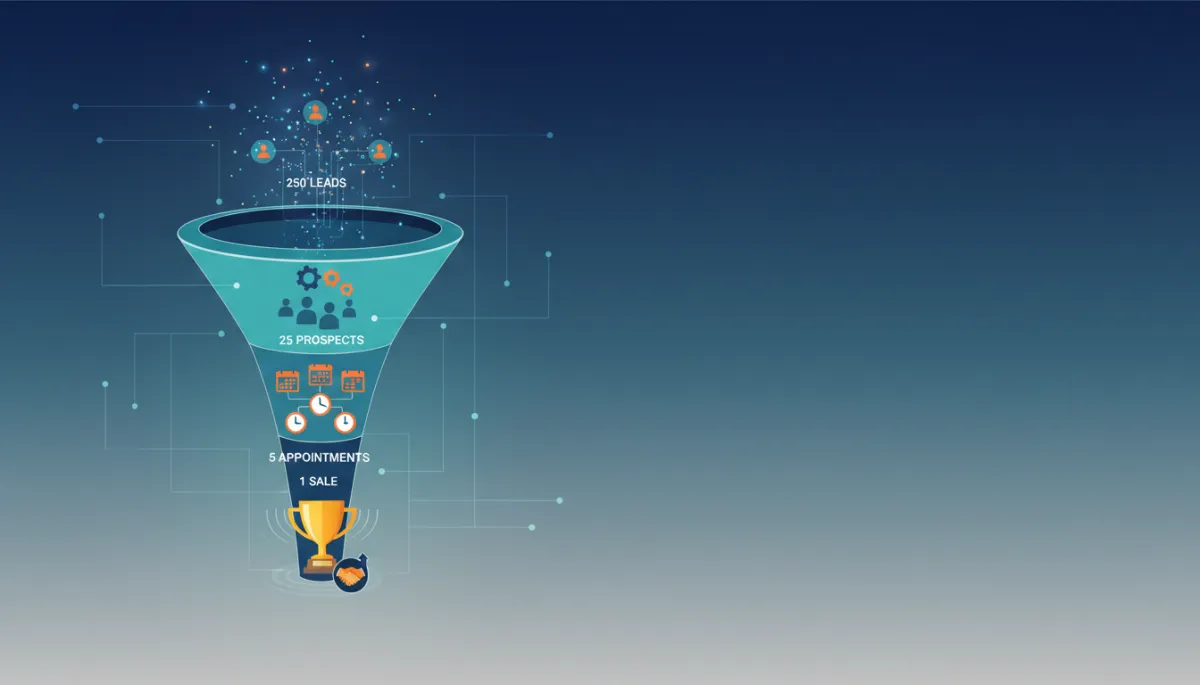
Every strong Sales Funnel begins with a clear target. In this example, your goal is Closing Sales—specifically, one new client for your business or agency. That single win is not an isolated event; it is the outcome of a deliberate Conversion Process that you can reverse-engineer and improve over time.
Working backward forces clarity. Instead of asking, “How can we get more leads?” you ask, “What has to happen before we close a sale—and in what volume?” This mindset turns vague goals into specific, trackable steps.
Step 1: From One Sale to Five Appointments
If your historical close rate is 20%, you typically need five quality appointments to close one sale. That is your first audible: everything about your Appointment Setting strategy should support booking at least five well-qualified meetings in the period you are targeting—weekly, monthly, or per campaign.
For businesses and agencies, this may involve revisiting how appointments are booked: refining discovery call scripts, tightening qualification criteria, or using automation to reduce no-shows. The key is to treat appointments as a scarce, high-value resource that must be protected and prepared for, not just filled.
Step 2: From Five Appointments to Twenty-Five Prospects
To secure those five appointments, you might need around twenty-five active prospects in your pipeline. These are not casual contacts; they are people who have shown meaningful interest and are engaged with your brand. This is the Prospect Engagement phase of the Sales Funnel, where you nurture relationships and qualify fit.
Practical tactics here include tailored email sequences, case-study driven follow-ups, and value-based check-ins rather than hard sells. For agencies, sharing a relevant campaign result or a brief audit can elevate you from “vendor” to “trusted advisor,” making the transition to Appointment Setting feel natural instead of forced.
Step 3: From Twenty-Five Prospects to 250 Leads
Now zoom out one more level. To maintain twenty-five active prospects, you may need roughly 250 leads entering the top of your funnel. This is the Lead Generation stage, where reach, relevance, and consistency matter most. Here, the question becomes: “What channels predictably feed 250 qualified leads into our system?”
For businesses and agencies, this might include content marketing, paid media, webinars, referrals, or outbound outreach. The point is not just volume, but alignment: each Lead Generation channel should attract the kind of potential clients who are likely to become engaged prospects, book appointments, and ultimately convert.
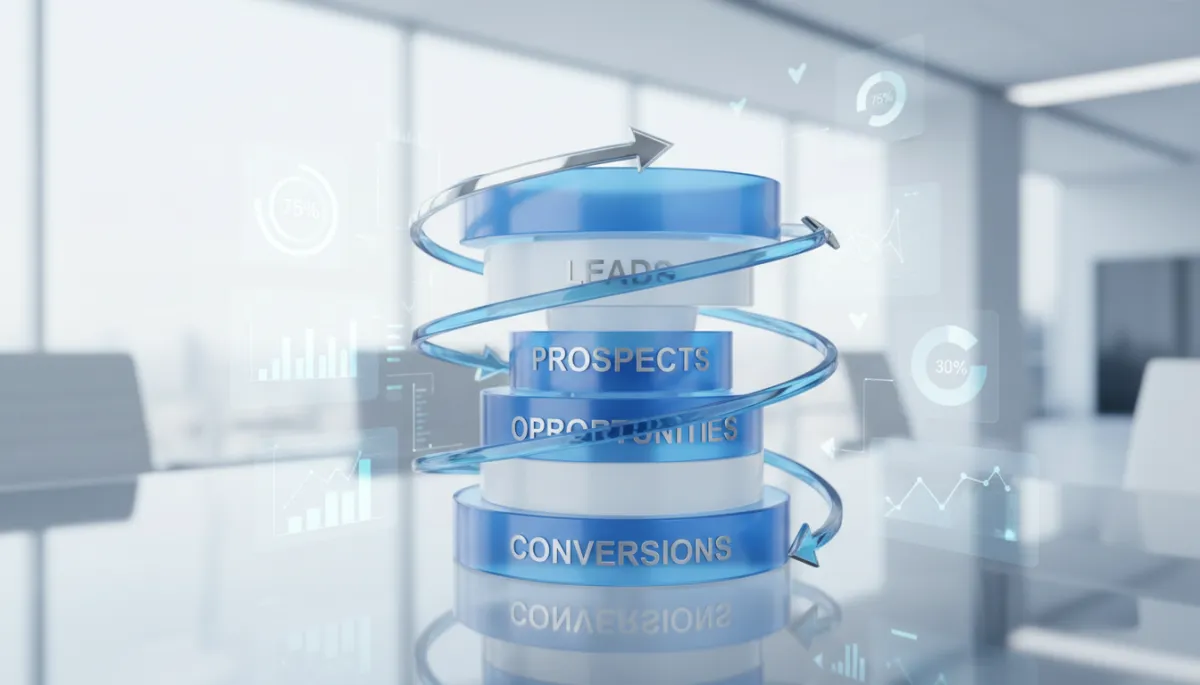
Visualizing each stage clarifies how many leads you need to hit revenue goals.
Turning Numbers into Audibles You Can Call in Real Time
Once you map your Sales Funnel as 250 leads → 25 prospects → 5 appointments → 1 sale, you gain the power to call audibles. If you are hitting your Lead Generation goal but falling short on appointments, you know the issue lies in Prospect Engagement or Appointment Setting—not in the top of the funnel. If you have plenty of appointments but weak conversion, the focus shifts to improving your discovery process and Closing Sales skills.
💡 Pro Tip: Review each stage weekly. Ask: “Where are we off target—leads, prospects, appointments, or closes?” Then adjust your audibles accordingly.
Build a Funnel That Serves Your Business, Not the Other Way Around
For modern businesses and agencies, the real strength of this backward-planning approach is control. By defining clear ratios across Lead Generation, Prospect Engagement, Appointment Setting, and Closing Sales, you transform your Sales Funnel from a vague concept into a measurable system. With that structure in place, every campaign, outreach sequence, and sales conversation has a defined role in moving people one step closer to becoming a client.


