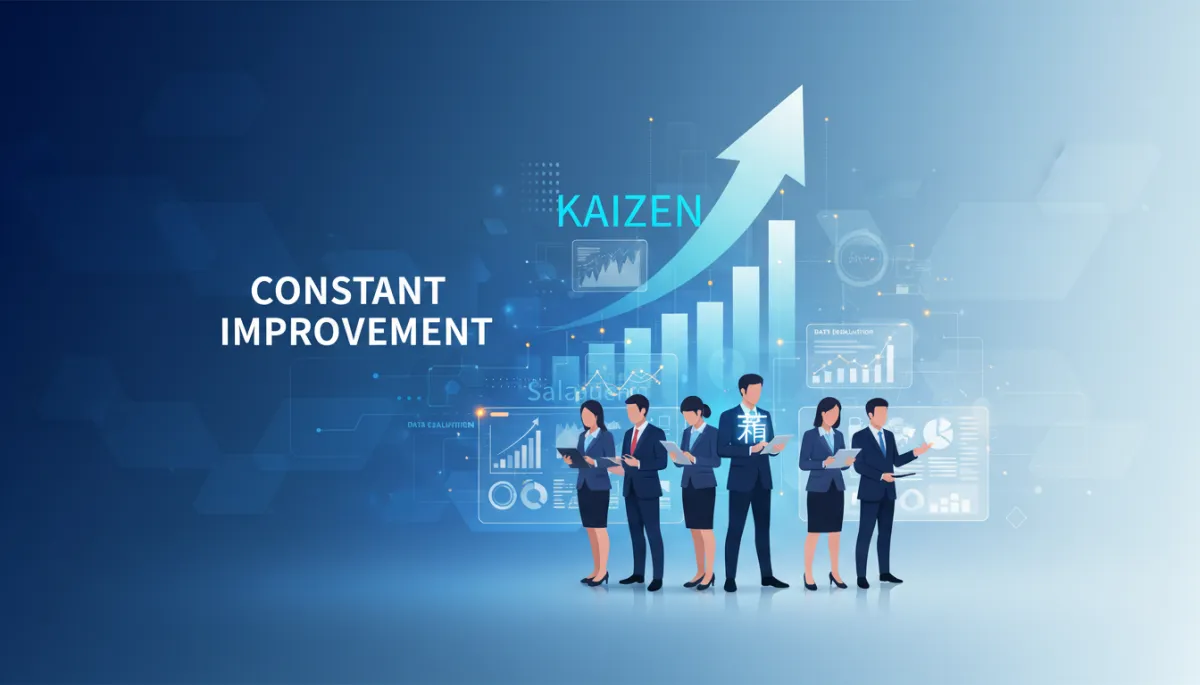
KaiZEN Sales Management: Daily Improvement Strategies
Sales Management, Leadership Culture, Constant Improvement
The “KaiZEN” Approach to Sales Management: Turning Data into Daily Improvement
For modern agencies and growth-focused businesses, winning in sales is no longer about one-off big ideas. It’s about building a Leadership Culture that treats every day as a chance for Constant Improvement. The KaiZEN Sales Management mindset applies the classic Kaizen philosophy—continuous, incremental change—to how you lead people, design Sales Strategies, and use Performance Metrics to guide smarter decisions.
What KaiZEN Sales Management Really Means
At its core, Kaizen Sales Management is about building a system where improvement is expected, not exceptional. Instead of reacting only when targets are missed, leaders create a rhythm of review, reflection, and refinement. Small adjustments—made weekly or even daily—compound into significant gains in revenue, win rates, and client retention over time.
This approach shifts the focus from “Who closed the most deals?” to “How did we get those deals, and how can we repeat it?” The emphasis is on learning, not just results. That is where Data Evaluation becomes the backbone of your leadership culture: numbers are no longer a report card; they are raw material for better Sales Strategies.
Building a Leadership Culture of Constant Review and Improvement
A KaiZEN-inspired leadership culture doesn’t happen by accident. It is designed through consistent behaviors and clear expectations. For agencies and sales organizations, three leadership practices make the biggest difference:
Short, frequent review cycles: Replace long, monthly post‑mortems with weekly or even daily check‑ins focused on what worked, what did not, and what to test next. These micro-reviews normalize Constant Improvement as part of the job.
Psychological safety around numbers: Leaders talk openly about missed targets without blame. Data is framed as feedback, not judgment, which encourages reps to surface issues early and share ideas for improvement.
Visibility of progress, not just outcomes: Recognize behaviors that support learning—testing a new script, refining discovery questions, or logging cleaner CRM notes—so the team sees that KaiZEN is about process, not just quotas.
💡 Pro Tip: End every team meeting with one “keep doing” and one “try next” action. Over time, those small KaiZEN steps reshape your entire sales culture.
Collecting the Right Data for Meaningful Sales Improvement
Effective KaiZEN Sales Management depends on the quality of the data you collect. More data is not always better; better data is better. Agencies and B2B teams should focus on a blend of activity, pipeline, and outcome Performance Metrics that can actually inform change:
Activity metrics: Calls made, emails sent, discovery meetings held, proposals delivered. These show effort and consistency but should never be the only focus.
Quality metrics: Meeting-to-opportunity conversion, opportunity-to-proposal conversion, proposal-to-close rate. These indicate how effective your Sales Strategies and conversations truly are.
Outcome metrics: Revenue, average deal size, sales cycle length, churn or renewal rates. These confirm whether your incremental improvements are compounding into real business impact.

Clear, focused metrics turn everyday sales activity into actionable insight.
Turning Data Evaluation into Daily Sales Actions
Collecting data is only half the equation. The KaiZEN mindset asks, “What will we do differently tomorrow?” After each review, leaders should translate Data Evaluation into one or two specific experiments: a revised outreach sequence, a new qualifying question, a tighter proposal template, or a clearer follow-up process.
Over time, these small tests become your competitive edge. You are not betting on a single “silver bullet” campaign. Instead, your team is constantly refining how you sell—guided by data, supported by a strong Leadership Culture, and grounded in the belief that every week offers a chance to get just a little better.
For agencies and businesses serious about growth, adopting KaiZEN Sales Management is less about installing a new tool and more about embracing a new identity: a sales organization that learns faster than the competition, led by managers who turn metrics into momentum, and built on the quiet power of Constant Improvement.


